The Dealership's Warranty Labor Rate Submission Guide
Our comprehensive warranty labor rate submission guide walks dealership managers and admins through calculating and submitting for an increase. Maximize revenue.
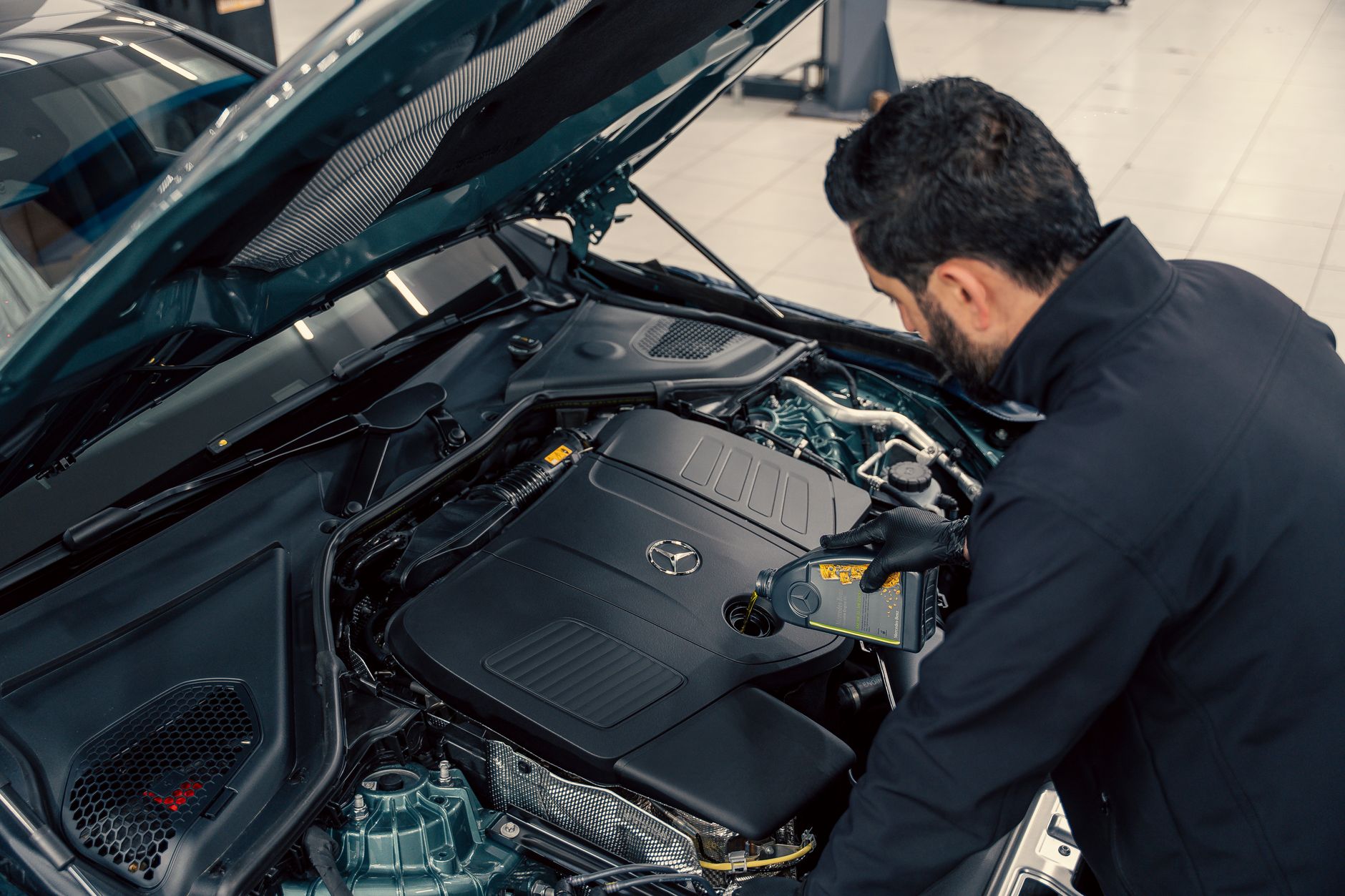
The gap is widening. Every day, the difference between what you charge retail customers for labor and the lower rate your OEM pays for warranty work quietly eats into your service department's gross profit. Many dealerships treat this margin compression as a cost of doing business, but it's not. It's lost revenue, and it's recoverable.
Successfully submitting for a warranty labor rate increase is one of the highest-impact activities a service department can undertake. It’s a direct injection of pure profit into every single warranty repair order. This guide provides a step-by-step framework for preparing and submitting a bulletproof request that your OEM will be compelled to approve.
Why Your Warranty Labor Rate is a Critical Profit Lever
Your warranty labor rate isn't just an administrative number; it's a fundamental lever for fixed ops profitability. When your warranty rate lags behind your retail rate, every warranty job is performed at a discount. Over hundreds or thousands of ROs per year, this shortfall adds up to tens or even hundreds of thousands of dollars in lost gross.
Securing a rate increase directly addresses this. An approved submission can add significant, recurring revenue to your bottom line without requiring you to sell a single extra hour. It ensures you are compensated fairly for the skilled labor your technicians provide, aligning the OEM's contribution with the market value you've established with your retail customers.
Fortunately, this isn't a matter of simply asking for a favor. In nearly all states, franchise laws empower dealerships to demand that OEMs reimburse them at their customary retail rate for warranty parts and labor. Your submission is a formal exercise of this right, backed by your own operational data.
Understanding the "Retail Rate" Calculation
Before you begin, it’s critical to understand what you're actually calculating. Your OEM isn't interested in your "door rate"—the advertised rate on your wall. They require your calculated retail rate, also known as the customer-pay effective labor rate. This is the true, average rate your paying customers are charged for non-warranty repairs.
The formula is simple in principle: Total customer-pay labor sales from a representative sample of ROs, divided by the total hours flagged on those same ROs. This figure represents what your dealership actually charges for labor in the real world, including the variations that come with different job types and technician skill levels.
This calculation is the bedrock of your submission. It provides the OEM with auditable proof that your requested rate is not arbitrary but is based on established, customary charges to your retail clientele.
Door Rate vs. Effective Rate: This is the most common point of failure. Submitting your posted "door rate" will almost always result in an immediate rejection. You must calculate your effective labor rate from a clean sample of actual, completed repair orders. Your submission is proving what you do charge, not what you say you charge.
The Step-by-Step Submission Process
The submission process is methodical and detail-oriented. An error in any phase can lead to delays or rejection, forcing you to start over. Follow these phases carefully to build a compliant and successful submission package.
Phase 1: Preparation and Planning
Success begins before you pull a single RO. This initial planning phase ensures your efforts aren't wasted.
- Review State and OEM Rules: Start by consulting your state's specific franchise laws regarding warranty reimbursement. Simultaneously, locate your OEM's most current service policy and procedure manual. Note their exact requirements for the submission: sample size (e.g., 100 consecutive ROs), time period, and any specific forms.
- Check Your Eligibility: Most OEMs impose a waiting period between rate increase submissions, typically one year. Confirm the date of your last approved increase to ensure you are eligible to apply again.
- Align Your Team: Inform your key stakeholders—the Service Manager, Controller, and General Manager—that you are initiating the process. This ensures everyone is aware and can provide support if needed, particularly when it comes to accessing DMS data and financial records.
Phase 2: Pulling Your Repair Order (RO) Sample
The quality of your RO sample is the single most important factor in your submission. OEMs scrutinize this sample to ensure it accurately reflects "repairs of like quality." This means excluding any work that doesn't represent a standard mechanical repair.
The standard requirement is a sample of 100 sequential, non-warranty, customer-pay repair orders. As you pull this list from your DMS, you must meticulously filter out the following common disqualifiers:
- Warranty and Policy: Any RO that includes warranty, extended warranty, service contract, or internal/policy work. The sample must be 100% customer-pay.
- Menu Items & Low-Skill Jobs: ROs that are exclusively for oil changes, tire rotations, filter replacements, or other low-skill, price-sensitive maintenance items.
- Body Shop or Collision Repairs: These are calculated differently and must be excluded.
- Sublet Repairs: If an RO contains sublet work, you must remove the sublet charges and associated labor from your calculation.
- Heavily Discounted ROs: While minor coupons are sometimes acceptable, ROs with significant discounts can skew the effective rate down and may be flagged by the OEM for removal.
- Accessory Installations: ROs for adding non-standard parts or accessories.
Your final sample should consist of ROs for general mechanical and electrical diagnosis and repair work paid for directly by customers.
Phase 3: The Calculation: Finding Your True Retail Rate
With a clean sample of ROs, you can now perform the calculation. This requires careful data entry to avoid mathematical errors.
- Isolate Labor Charges: For each qualifying RO in your sample, identify the total customer-pay labor charges. Do not include parts, shop supplies, or taxes.
- Isolate Labor Hours: For each RO, identify the total number of labor hours charged for that work.
- Sum the Totals: Create a spreadsheet. Sum the total labor charges from all ROs in your sample to get a grand total.
- Sum the Hours: In the same spreadsheet, sum the total labor hours from all ROs to get a grand total.
- Calculate the Rate: Divide your Total Labor Charges by your Total Labor Hours. The result is your calculated retail rate.
Here is a simplified example using a small sample:
| RO Number | Customer-Pay Labor Sales | Labor Hours Charged |
|---|---|---|
| 12345 | $480.00 | 3.0 |
| 12346 | $320.00 | 2.0 |
| 12348 | $640.00 | 4.0 |
| ... | ... | ... |
| Total | $20,400.00 | 120.0 |
Calculation: $20,400.00 / 120.0 hours = $170.00 per hour
This final number—$170.00 in our example—is the rate you will formally request from the OEM.
Phase 4: Assembling and Submitting Your Package
Your final step is to assemble all required documentation into a professional, organized package. A typical submission includes:
- The OEM Submission Form: The official, brand-specific form for a warranty labor rate increase, filled out completely and accurately.
- RO Sample List: A printed spreadsheet or DMS report listing every single RO number included in your calculation, along with the corresponding labor sales and hours for each.
- Hard Copies of All ROs: This is non-negotiable. You must print a physical, signed copy of every repair order used in your calculation. The OEM will use these for auditing.
- A Formal Cover Letter: A brief letter on dealership letterhead addressed to the appropriate OEM contact. It should state your purpose, cite the calculated retail rate you are requesting, and reference the relevant state statutes that support your submission.
Once assembled, submit the package according to your OEM's specific instructions. This may be via a dedicated portal, an email to a regional representative, or certified mail.
State Laws: The Foundation of Your Submission
Your request for a labor rate increase is not a negotiation; it is a formal demand for fair compensation as defined by law. The vast majority of states have franchise laws that require manufacturers to reimburse dealerships for warranty service at rates equal to what they normally charge retail customers.
These statutes provide the legal backbone for your submission. They establish the "like quality" standard and obligate the OEM to honor a properly calculated and documented request. While the specific language varies by state, the principle is consistent.
Familiarize yourself with your state's laws. Your state's auto dealer association is an excellent resource for this information and can provide guidance on the specific precedents and language that apply in your jurisdiction. Citing the relevant statute in your cover letter demonstrates that you have done your homework and understand your rights.
Disclaimer: We are not lawyers, and this guide does not constitute legal advice. Always consult your dealership's legal counsel and your state dealer association to fully understand the specific statutes and precedents that apply to you.
Common Pitfalls That Lead to Rejection
OEMs review submissions carefully, and they will use any procedural error as grounds for rejection. Avoiding these common unforced errors is the key to a first-time approval.
- Incorrect RO Sample: This is the number one reason for rejection. Including even a few disqualified ROs (e.g., an oil change, a warranty job, or a body shop repair) can invalidate your entire sample.
- Mathematical Errors: Simple mistakes in addition or division will trigger an immediate rejection. Double-check and triple-check your math before submitting.
- Missing Documentation: Forgetting to include hard copies of all ROs, failing to sign the form, or omitting the RO list will result in the package being returned.
- Submitting the "Door Rate": As mentioned, requesting your posted door rate instead of your calculated effective rate is a fundamental misunderstanding of the process and will be denied.
- Ignoring OEM-Specific Rules: If your OEM requires 100 ROs from the last 90 days, don't submit 75 ROs from the last 180 days. Follow their rules to the letter.
- Failure to Remove Sublet: Leaving sublet charges in your labor sales calculation artificially inflates your rate and is a clear violation of the rules. For more on process integrity, see our guide on the car dealership warranty claim process.
How AI and Automation Streamline Rate Submissions
The manual process outlined above is effective but incredibly time-consuming and prone to human error. A single mistake in RO selection or a typo in a spreadsheet can derail the entire submission, wasting dozens of hours of a manager's or administrator's time.
This is where technology provides a decisive advantage. AI-powered platforms can automate the most burdensome parts of the process, ensuring speed, accuracy, and compliance. Instead of spending days sifting through ROs and punching numbers into a calculator, you can generate a submission-ready package in minutes.
| Manual Process | Automated Process with Forge AI |
|---|---|
| Manually pulling and vetting 100+ ROs | AI automatically flags and selects compliant ROs |
| Hours spent on spreadsheets and calculators | Instant, error-free calculation of the retail rate |
| High risk of human error leading to rejection | Ensures accuracy and compliance with OEM rules |
| Time-consuming for highly-paid admin/manager | Frees up staff to focus on higher-value tasks |
By leveraging automated warranty claim processing tools, dealerships can eliminate the risk of manual errors and build a perfect, data-driven case for their maximum approvable rate every time.
Frequently Asked Questions (FAQ)
How do I submit a warranty labor rate increase?
You submit an increase by first reviewing your state laws and OEM rules. Then, you pull a clean sample of 100% customer-pay repair orders, calculate your effective retail rate from that sample, and submit a formal package with all required documentation to your OEM.
How is warranty labor calculated by the OEM?
OEMs typically pay for warranty labor by multiplying a pre-determined flat-rate time (e.g., 1.5 hours for a specific repair) by your dealership's approved warranty labor rate. The goal of a rate submission is to increase that rate to match what you charge retail customers for the same amount of time.
Can an OEM deny a labor rate increase?
Yes, an OEM can deny a submission, but they must typically provide a valid reason. Common reasons for denial are procedural, such as a flawed RO sample, mathematical errors, or failure to follow the OEM's submission process. A properly calculated and documented submission backed by state law is very difficult to deny.
What is a good warranty labor rate for a car dealership?
There is no universal "good" rate. The correct rate is your dealership's unique, calculated retail rate based on what your actual customers pay for repairs. This rate can vary significantly based on your brand, geographic location, and local market conditions. The goal is to get your warranty rate to match this calculated retail rate.
Executing a warranty labor rate submission is not just another administrative task—it's a critical revenue recovery initiative. The process demands precision, attention to detail, and a thorough understanding of the rules. By being methodical, building your case on a foundation of clean data, and understanding your rights under state law, you can successfully close the gap between your retail and warranty rates. Leveraging modern tools to automate the tedious and error-prone steps can transform this from a once-a-year headache into a streamlined and highly profitable process.
Ready to automate?
See how Forge eliminates manual warranty work
Upload ROs to Forge and submit directly to your OEM warranty portal. Forge AI handles data entry, compliance checks, and claim tracking — live in under an hour.
More from Revenue Recovery
Appealing Rejected Warranty Claims: A Step-by-Step Guide
Struggling with rejected warranty claims? Learn our step-by-step process for appealing OEM decisions, from gathering evidence to writing a compelling appeal letter.
Dealership Revenue Recovery: Claiming Misc. Expenses & Add-ons
Stop leaving money on the table. This guide covers revenue recovery through miscellaneous expenses, shop supplies, sublets, and other missed add-ons on warranty claims.